Monday, May 23, 2016

Prevention of Water Pollution

Things You Can Do To Reduce Water Pollution


  • DO NOT pour fat from cooking or any other type of fat, oil, or grease down the sink. Keep a “fat jar” under the sink to collect the fat and discard in the solid waste when full.
  • DO NOT dispose of household chemicals or cleaning agents down the sink or toilet. 
  • DO NOT flush pills, liquid or powder medications or drugs down the toilet. For recommendations on proper disposal for all types of medical wastes, visit the CT DEP publication here.
  • Avoid using the toilet as a wastebasket. Most tissues, wrappers, dust cloths, and other paper goods should be properly discarded in a wastebasket. The fiber reinforced cleaning products that have become popular should never be discarded in the toilet.
  • Avoid using a garbage disposal. Keep solid wastes solid. Make a compost pile from vegetable scraps.
  • Install a water efficient toilet. In the meantime, put a brick or 1/2 gal container in the standard toilet tank to reduce water use per flush.
  • Run the dishwasher or clothes washer only when you have a full load. This conserves electricity and water.
  • Use the minimum amount of detergent and/or bleach when you are washing clothes or dishes. Use only phosphate free soaps and detergents.
  • Minimize the use of pesticides, herbicides, fertilizers. DO NOT dispose of these chemicals, motor oil, or other automotive fluids into the sanitary sewer or storm sewer systems. Both of them end at the river.

Wednesday, May 18, 2016

Effect of chlorofluorocarbon on environment


What is it?
Chlorofluorocarbons (CFCs) are a group of compounds which contain the elements chlorine, fluorine and carbon. At room temperatures, they are usually colourless gases or liquids which evaporate easily. They are generally unreactive and stable, non-toxic and non-flammable. CFCs are also a part of the group of chemicals known as the volatile organic compounds (VOCs).
What is it used for?
The properties of CFCs make them useful for a variety of commercial and industrial purposes: as a propellant in aerosol sprays (now banned in the US and Europe), in refrigeration and air conditioning systems, in foams, in cleaning solvents and in electrical components.
Where does it come from?
Most CFCs have been released to the atmosphere through the use of aerosols containing them and as leakages from refrigeration equipment. Other releases may occur from industry producing and using them and other products containing them. There are not thought to be any natural sources of CFCs to the environment.
How might it affect the environment?
CFCs are unlikely to have any direct impact on the environment in the immediate vicinity of their release. As VOCs, they may be slightly involved in reactions to produce ground level ozone, which can cause damage to plants and materials on a local scale. At a global level however, releases of CFCs have serious environmental consequences. Their long lifetimes in the atmosphere mean that some end up in the higher atmopshere (stratosphere) where they can destroy the ozone layer, thus reducing the protection it offers the earth from the sun's harmful UV rays. CFCs also contribute to Global Warming (through "the Greenhouse Effect"). Although the amounts emitted are relatively small, they have a powerful warming effect (a very high "Global Warming Potential").

Effects of Pesticides on Human Health

Introduction

Pesticides are designed to kill and because their mode of action is not specific to one species, they often kill or harm organisms other than pests, including humans. The World Health Organization estimates that there are 3 million cases of pesticide poisoning each year and up to 220,000 deaths, primarily in developing countries. The application of pesticides is often not very precise, and unintended exposures occur to other organisms in the general area where pesticides are applied. Children, and indeed any young and developing organisms, are particularly vulnerable to the harmful effects of pesticides. Even very low levels of exposure during development may have adverse health effects.
Pesticide exposure can cause a range of neurological health effects such as memory loss, loss of coordination, reduced speed of response to stimuli, reduced visual ability, altered or uncontrollable mood and general behavior, and reduced motor skills. These symptoms are often very subtle and may not be recognized by the medical community as a clinical effect. Other possible health effects include asthma, allergies, and hypersensitivity, and pesticide exposure is also linked with cancer,hormone disruption, and problems with reproduction and fetal development.
Pesticide formulations contain both "active" and "inert" ingredients. Active ingredients are what kill the pest, and inert ingredients help the active ingredients to work more effectively. These "inert" ingredients may not be tested as thoroughly as active ingredients and are seldom disclosed on product labels. Solvents, which are inert ingredients in many pesticide formulations, may be toxic if inhaled or absorbed by the skin.
Children are at greater risk from exposure to pesticides because of their small size: relative to their size, children eat, drink, and breathe more than adults. Their bodies and organs are growing rapidly, which also makes them more susceptible; in fact, children may be exposed to pesticides even while in the womb.

SOIL POLLUTION

Soil pollution is defined as the build-up in soils of persistent toxic compounds, chemicals, salts, radioactive materials, or disease causing agents, which have adverse effects on plant growth and animal health.

There are many different ways that soil can become polluted, such as:

• Seepage from a landfill
• Discharge of industrial waste into the soil
• Percolation of contaminated water into the soil
• Rupture of underground storage tanks
• Excess application of pesticides, herbicides or fertilizer
• Solid waste seepage The most common chemicals involved in causing soil pollution are:
• Petroleum hydrocarbons
• Heavy metals
• Pesticides
• Solvents

Environmental Long Term Effects of Soil Pollution

When it comes to the environment itself, the toll of contaminated soil is even more dire. Soil that has been contaminated should no longer be used to grow food, because the chemicals can leech into the food and harm people who eat it. If contaminated soil is used to grow food, the land will usually produce lower yields than it would if it were not contaminated. This, in turn, can cause even more harm because a lack of plants on the soil will cause more erosion, spreading the contaminants onto land that might not have been tainted before. In addition, the pollutants will change the makeup of the soil and the types of microorganisms that will live in it. If certain organisms die off in the area, the larger predator animals will also have to move away or die because they've lost their food supply. Thus it's possible for soil pollution to change whole ecosystems

Effects of soil pollution in brief:

• pollution runs off into rivers and kills the fish, plants and other aquatic life
• crops and fodder grown on polluted soil may pass the pollutants on to the consumers
• polluted soil may no longer grow crops and fodder
• Soil structure is damaged (clay ionic structure impaired)
• corrosion of foundations and pipelines
• impairs soil stability
• may release vapours and hydrocarbon into buildings and cellars
• may create toxic dusts
• may poison children playing in the area 

Sunday, May 8, 2016

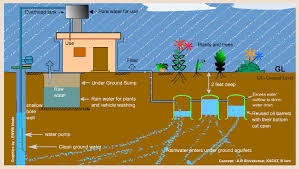
WHY RAIN WATER HARVESTING

Rain water harvesting, particularly in urban areas, as a technological solution that can be adopted by all to decrease the groundwater layer. We have to promote water harvesting began with its in-depth research on India’s rich traditions in using rainwater harvesting for a sustainable, participatory and equitable management of water. People have to know how rainwater harvesting is done. In order to create awareness among people and decision-makers, how policy options can be developed and implemented.

Wetlands are vital sponges in the city. In cities most of the rain water is wasted. Minimum use of plastic materials and reuse of plastic can help to increase the groundwater layer. Govt. of India should take a major initiative for rain water harvesting.

The reasons for using rainwater harvesting systems answer three questions:

What: Rainwater harvesting will improve water supply, food production, and ultimately food security.

Who: Water insecure households or individuals in rural areas will benefit the most from rainwater harvesting systems.

How: Since rainwater harvesting leads to water supply which leads to food security, this will greatly contribute to income generation.

Friday, April 22, 2016

EARTH DAY CELEBRATION AND LEARNING


Five things you didn't know about Earth Day

1.One billion people across the world will get involved with Earth Day this year
2.The celebration has its own flag that features a picture of the Earth taken from the Apollo 17 spacecraft on its way to the Moon
3.20 million people participated in the first ever Earth Day in 1970
4.No one knows where the name or date for the day came from as the organisers can't remember
5.In 2008 Disney launched Disney nature, a channel dedicated to environmental documentaries, in celebration of Earth Day

How to get involved

There are Earth Day events taking place across the globe. Google has created a special map with a selection of planned events in different countries.

You can get involved without attending an official event by trying some of the following activities:

1.Walk to work, cycle or take public transport
2.Use a reusable coffee cup
3.Make sure you recycle
4.Go paperless
5.Take a tote bag to the shop
6.Plant a tree
7.Go meat or dairy free at least once a week
8.Carry a reusable water bottle
9.Add the Earth Mode Google Chrome extension to your browser to monitor your energy use
10.Buy local produce

Monday, April 4, 2016

Global Warming Solution proposed by Scientists


With global temperatures rising inexorably, some scientists and national security theorists have pondered
cooling things down by tinkering mechanically with the planet’s climate.

The goal of this geoengineering would be to create an effect not unlike when clouds suddenly block the sun and chill a warm afternoon. Average surface temperatures might be held down by a few degrees worldwide, these experts suggest — enough, they theorize (maybe with fingers crossed), to stave off environmental cataclysm.

How to do this? With smoke and mirrors. For real.

One idea is to launch giant mirrors into space, where they would bounce back some of the sun’s energy.
Another suggestion involves spraying ocean water into the air to whiten clouds and thereby increase their capacity to deflect sunlight. Then there is a widely discussed plan to pump sulfate aerosols into the stratosphere. Those particles, too, would reflect the sun’s radiation back toward space, comparable to the effects of natural phenomena like volcanic eruptions. The haze created by the eruption of Mount Pinatubo in the Philippines in 1991 spread so widely that average global temperatures dropped by nearly one degree for more than a year.

Let’s set aside these proposals for a moment to first note that the aerosols plan faintly echoes a terrifying scenario that informs the latest offering from Retro Report, a series of video documentaries that study the
continuing impact of major news stories of the past.

With forests and scores of cities set ablaze, enough dust and smoke would be hurled into the upper atmosphere to blot out the sun. The darkening would last for many months, most oppressively in the Northern Hemisphere, though the Southern Hemisphere would hardly be immune. Beneath the sun-blocking canopy, surface temperatures would plummet, conceivably by as much as 60 degrees Fahrenheit. Plant and animal life would die. Famine would spread across the globe.

Saturday, February 6, 2016

Air Pollution and its effect


(1) Air Pollution: Air is mainly a mixture of various gases such as oxygen, carbon dioxide, nitrogen. These are present in a particular ratio. Whenever there is any imbalance in the ratio of these gases, air pollution is caused. The sources of air pollution can be grouped as under
(i) Natural; such as, forest fires, ash from smoking volcanoes, dust storm and decay of organic matters.
(ii) Man-made due to population explosion, deforestation, urbanization and industrializations.
Certain activities of human beings release several pollutants in air, such as carbon monoxide (CO), sulfur dioxide (SO2), hydrocarbons (HC), oxides of nitrogen (NOx), lead, arsenic, asbestos, radioactive matter, and dust. The major threat comes from burning of fossil fuels, such as coal and petroleum products. Thermal power plants, automobiles and industries are major sources of air pollution as well. Due to progress in atomic energy sector, there has been an increase in radioactivity in the atmosphere. Mining activity adds to air pollution in the form of particulate matter. Progress in agriculture due to use of fertilizers and pesticides has also contributed towards air pollution. Indiscriminate cutting of trees and clearing of forests has led to increase in the amount of carbon dioxide in atmosphere. Global warming is a consequence of green house effect caused by increased level of carbon dioxide (CO2). Ozone (O3) depletion has resulted in UV radiation striking our earth.

The gaseous composition of unpolluted air
The Gases
Parts per million (vol)
Nitrogen
756,500
Oxygen
202,900
Water
31,200
Argon
9,000
Carbon Dioxide
305
Neon
17.4
Helium
5.0
Methane
0.97-1.16
Krypton
0.97
Nitrous oxide
0.49
Hydrogen
0.49
Xenon
0.08
Organic Postulates
ca.0.02
Harmful Effects of air pollution –
(a) It affects respiratory system of living organisms and causes bronchitis, asthma, lung cancer, pneumonia etc. Carbon monoxide (CO) emitted from motor vehicles and cigarette smoke affects the central nervous system.
(b) Due to depletion of ozone layer, UV radiation reaches the earth. UV radiation causes skin cancer, damage to eyes and immune system.
(c) Acid rain is also a result of air pollution. This is caused by presence of oxides of nitrogen and sulfur in the air. These oxides dissolve in rain water to form nitric acid and sulfuric acid respectively. Various monuments, buildings, and statues are damaged due to corrosion by acid present in the rain. The soil also becomes acidic. The cumulative effect is the gradual degradation of soil and a decline in forest and agricultural productivity.
(d) The green house gases, such as carbon dioxide (CO2) and methane (CH4) trap the heat radiated from earth. This leads to an increase in earth’s temperature.
(e) Some toxic metals and pesticides also cause air pollution.

Sunday, January 31, 2016

Tips for saving water


1) Turn off the tap when you brush your teeth – this can save 6 litres of water per minute.

2) Place a cistern displacement device in your toilet cistern to reduce the volume of water used in each flush. You can get one of these from your water provider.

3) Take a shorter shower. Shower can use anything between 6 and 45 litres per minute.

4) Always use full loads in your washing machine and dishwasher – this cuts out unnecessary washes in between.

5) Fix a dripping tap. A dripping tap can waste 15 litres of water a day, or 5,500 litres of water a year.

6) Install a water butt to your drainpipe and use the water collected to water your plants, clean your car and wash your windows.

7) Water your garden with a watering can rather than a hosepipe. A hosepipe uses 1,000 litres of water an hour. Mulching your plants (with bark chippings, heavy compost or straw) and watering in the early morning and late afternoon will reduce evaporation and also save water.

8) Fill a jug with tap water and place this in your fridge. This will mean you do not have to leave the cold tap running for the water to run cold before you fill your glass.

9) Install a water meter. When you're paying your utility provider for exactly how much water you use, laid out in an itemised bill, there's an incentive to waste less of the stuff.

10) Invest in water-efficient goods when you need to replace household products. You can now buy water-efficient showerheads, taps, toilets, washing machines, dishwashers and many other water-saving products. 


Thank you


Sunday, December 20, 2015

Climate Change - Climate Crisis


 Greenhouse Gases Have Already Reached Dangerous Tipping Point
 
Climate change, or global warming, is the greatest environmental threat we've ever faced. How we respond to this crisis will greatly impact both current and future generations and all other species.
The global carbon dioxide equivalent of greenhouse gases ( GHG ) in the atmosphere has exceeded 400 parts per million ( NOAA ). This level is considered a tipping point.
"There is alarming evidence that important tipping points, leading to irreversible changes in major ecosystems and the planetary climate system, may already have been reached or passed. Ecosystems as diverse as the Amazon rainforest and the Arctic tundra, for example, may be approaching thresholds of dramatic change through warming and drying. Mountain glaciers are in alarming retreat and the downstream effects of reduced water supply in the driest months will have repercussions that transcend generations. Climate feedback systems and environmental cumulative effects are building across Earth systems demonstrating behaviors we cannot anticipate.
"The potential for runaway greenhouse warming is real and has never been more present. The most dangerous climate changes may still be avoided if we transform our hydrocarbon based energy systems and if we initiate rational and adequately financed adaptation programs to forestall disasters and migrations at unprecedented scales. The tools are available, but they must be applied immediately and aggressively." 

Global temperatures are now the highest in 4,000 years.

Report from National Oceanic & Atmospheric Administration:
In 2015.
"When I look at this data, the trend is perfectly in line with a temperature increase of 6 degrees Celsius (by 2050), which would have devastating consequences for the planet."
On a positive note, research indicate that global emissions of carbon dioxide from the energy sector stalled in 2014, marking the first time in 40 years in which there was a halt or reduction in emissions of the greenhouse gas that was not tied to an economic downturn.
Report from the UN Office for the Coordination of Humanitarian Affairs (OCHA):
" In 2012, there were 905 natural catastrophes worldwide—and 93 percent of these events were weather-related disasters"."Climate disasters are. . . up from around 50 percent from two decades ago. These disasters take a heavier human toll and come with a higher price tag.  In the last decade, 2.4 billion people were affected by climate related disasters, compared to 1.7 billion in the previous decade. The cost of responding to disasters has risen tenfold between 1992 and 2008".
"Destructive sudden heavy rains, intense tropical storms, repeated flooding and droughts are likely to increase, as will the vulnerability of local communities in the absence of strong concerted action."
"Climate change is not just a distant future threat. It is the main driver behind rising humanitarian needs and we are seeing its impact. 
The number of people affected and the damages inflicted by extreme weather has been unprecedented."
"Unless we can reduce the amount of carbon dioxide in the atmosphere to 350 parts per million, we will cause huge and irreversible damage to the earth."
Global Warming